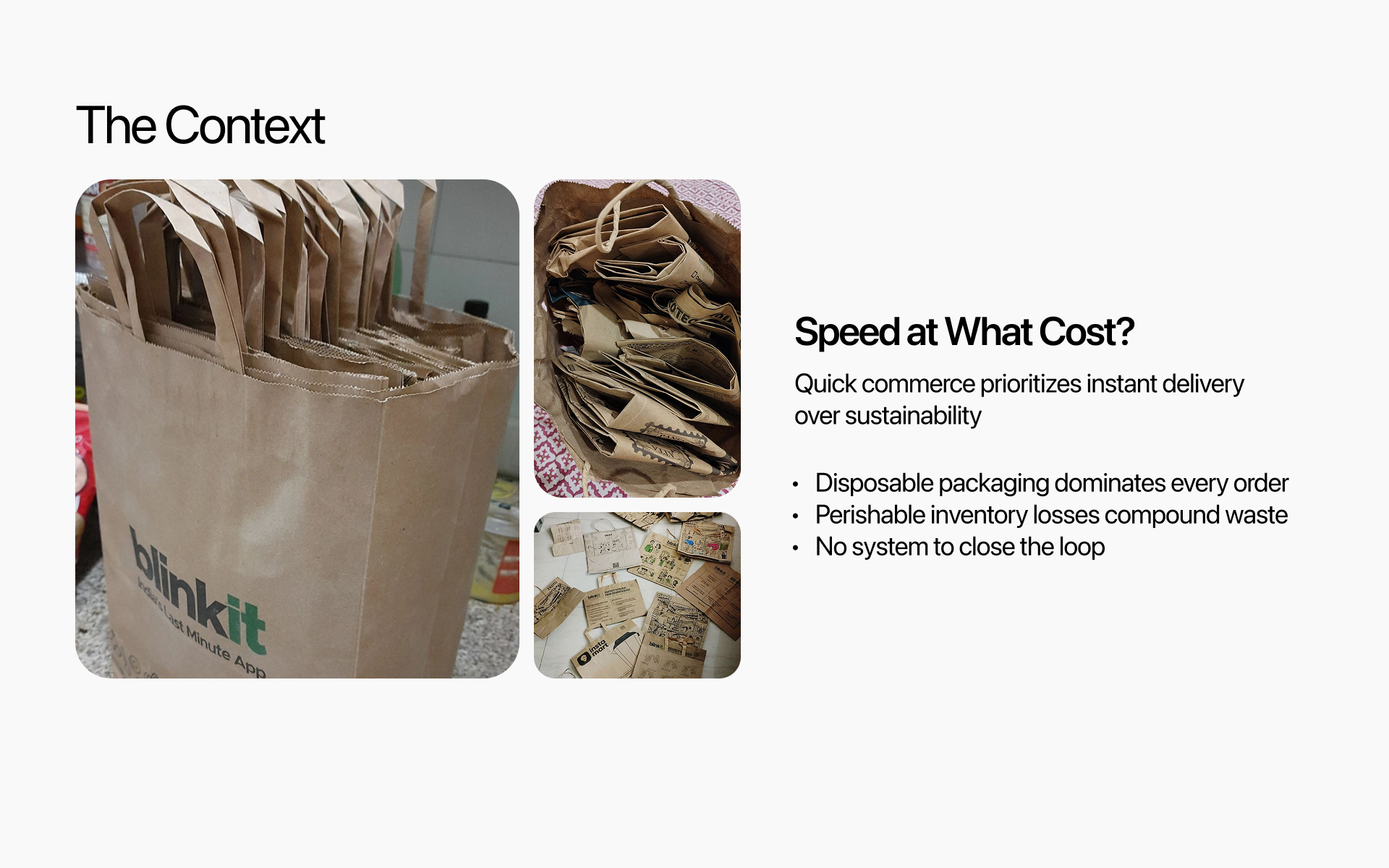
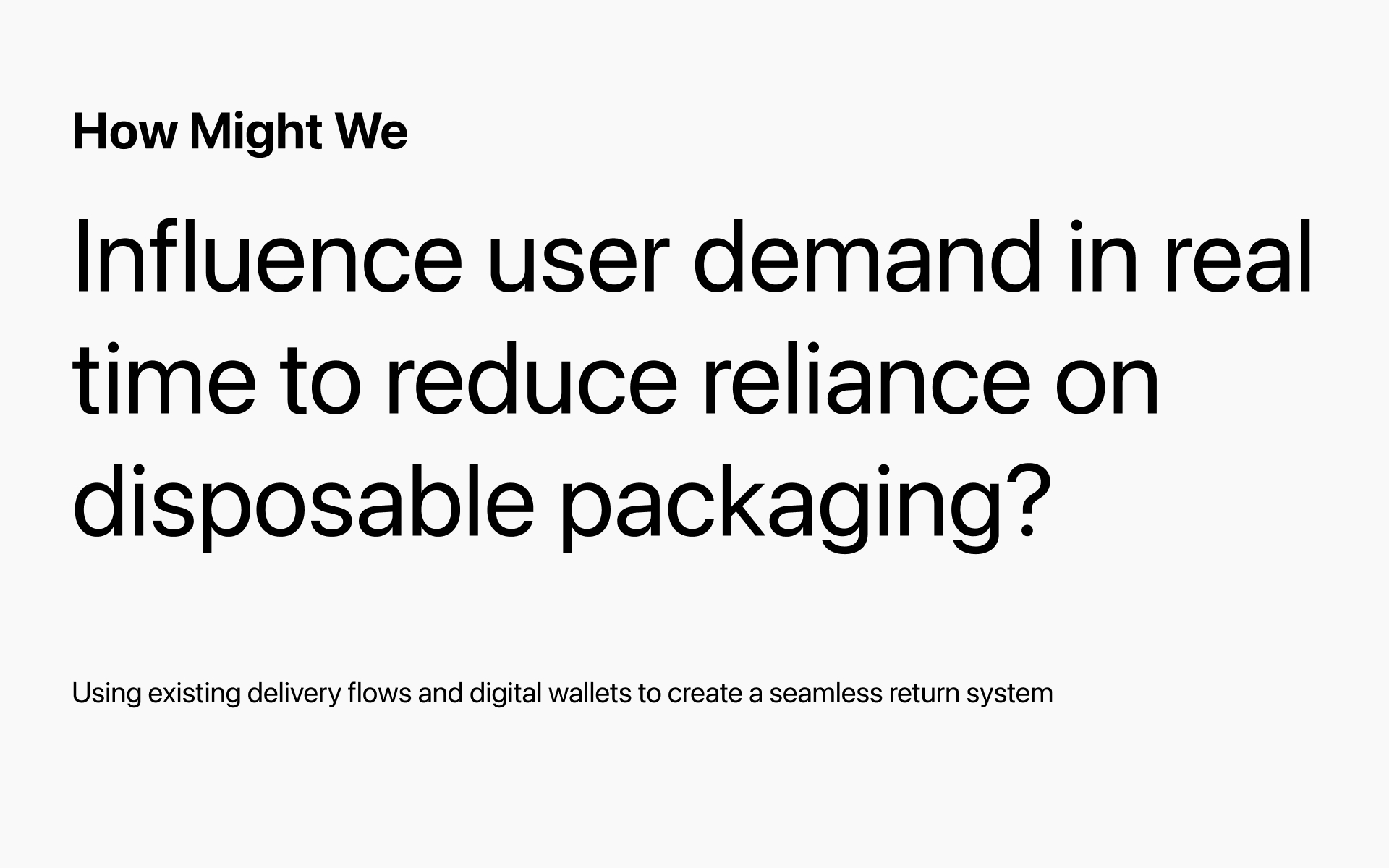
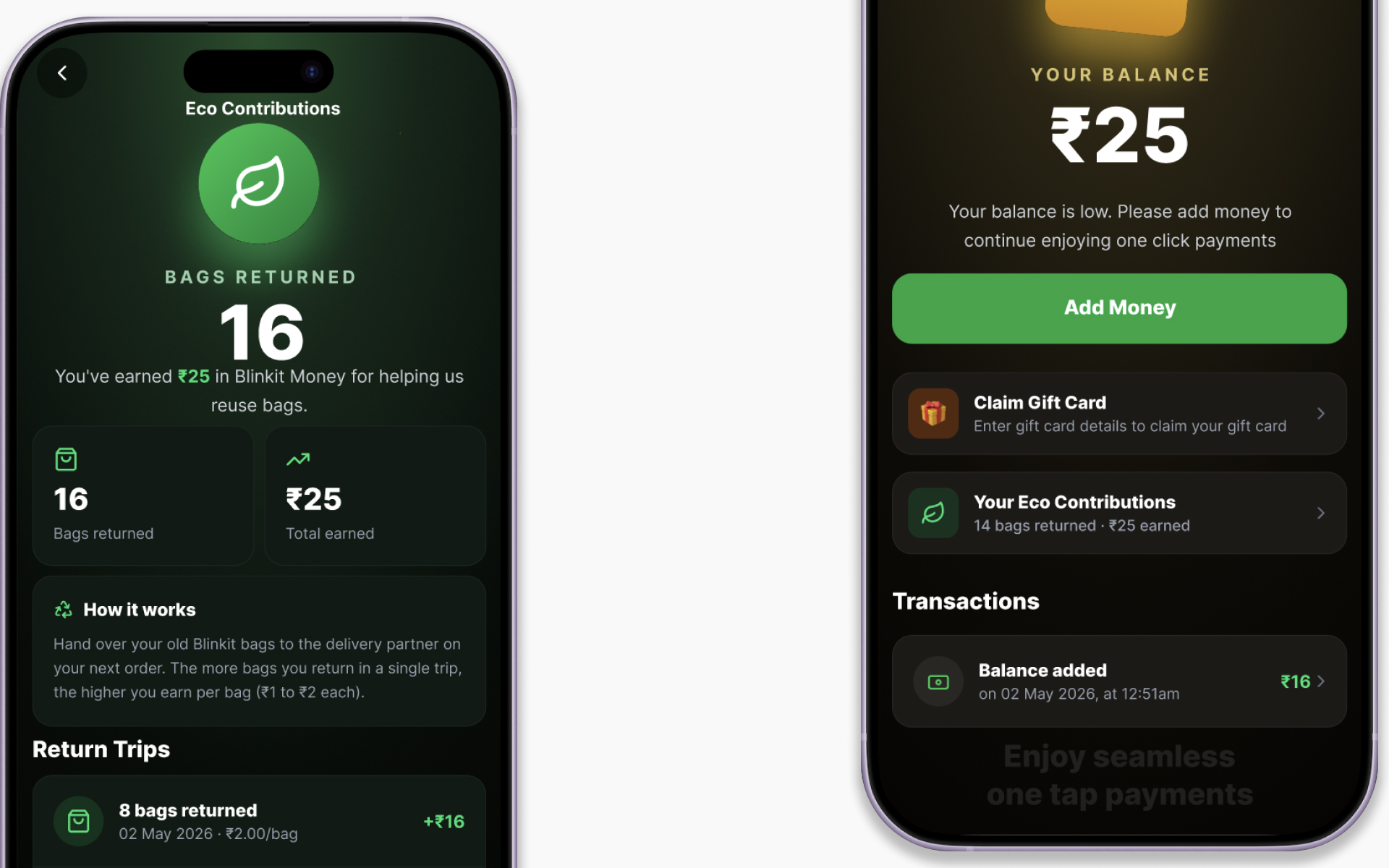
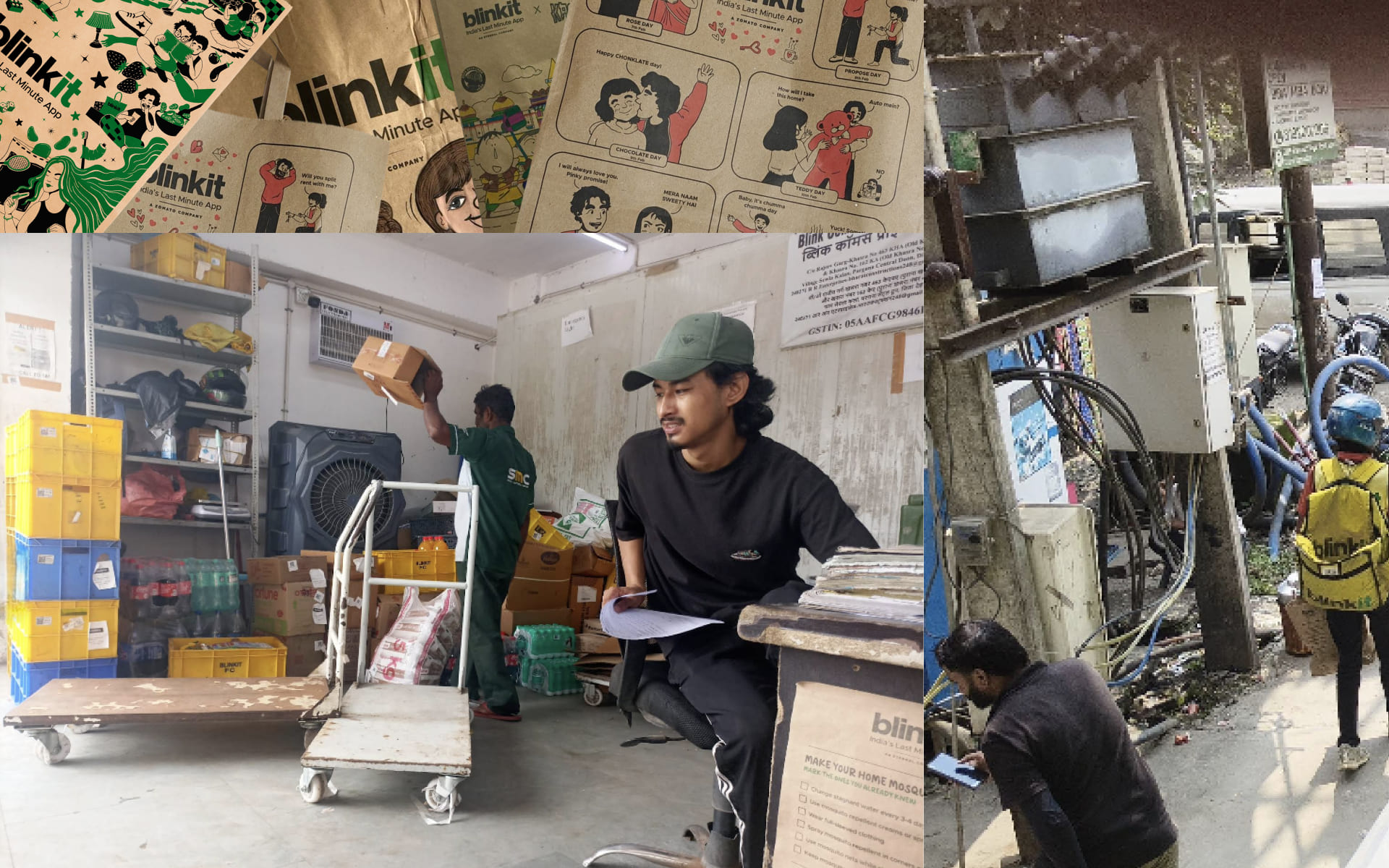
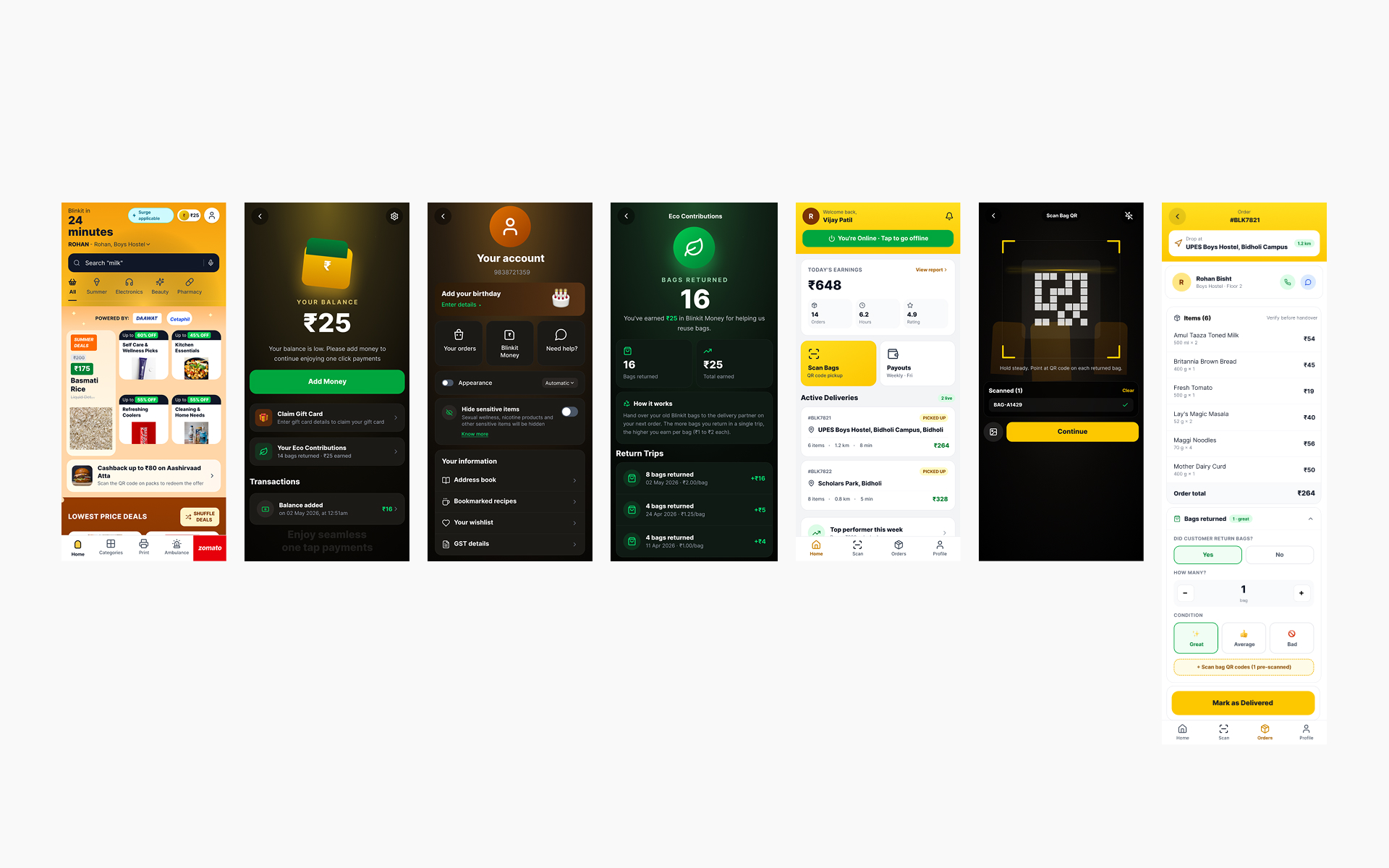
Sixty-four survey responses, warehouse interviews, and focus groups all pointed to the same thing: the waste problem here is behavioral, not infrastructural. So the fix rides on infrastructure that already exists. A bag return prompt gets embedded right into the delivery handoff, the user hands bags back to the same delivery partner who just dropped off their order, scans them with their phone camera, gets instant wallet credit. No new hardware, no new app, no behavior change beyond one extra thirty-second step. The strongest part of the pitch was the three-sided incentive: users earn a small credit and get a reason to stay loyal, Blinkit chips away at packaging costs in a business where margins are brutally thin, and it counts toward their sustainability goals.
Sixty-four survey responses, warehouse interviews, and focus groups all pointed to the same thing: the waste problem here is behavioral, not infrastructural. So the fix rides on infrastructure that already exists. A bag return prompt gets embedded right into the delivery handoff, the user hands bags back to the same delivery partner who just dropped off their order, scans them with their phone camera, gets instant wallet credit. No new hardware, no new app, no behavior change beyond one extra thirty-second step. The strongest part of the pitch was the three-sided incentive: users earn a small credit and get a reason to stay loyal, Blinkit chips away at packaging costs in a business where margins are brutally thin, and it counts toward their sustainability goals.