Project image
Digital Experience

Colormesh

← Back to Portfolio
Category

Digital Experience

Duration

1 week

Timeframe

Winter 2025

Visit Live Site
Overview

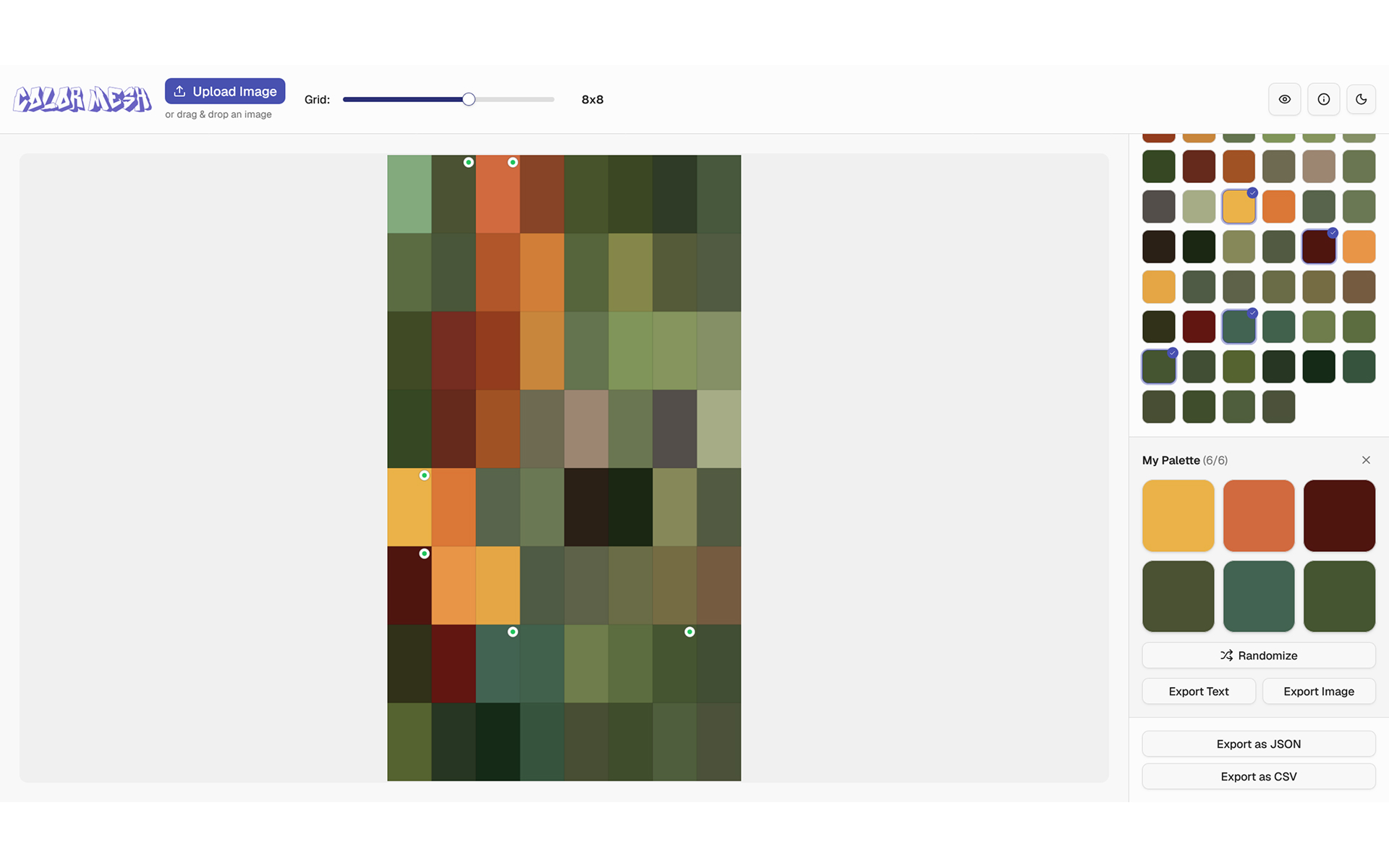
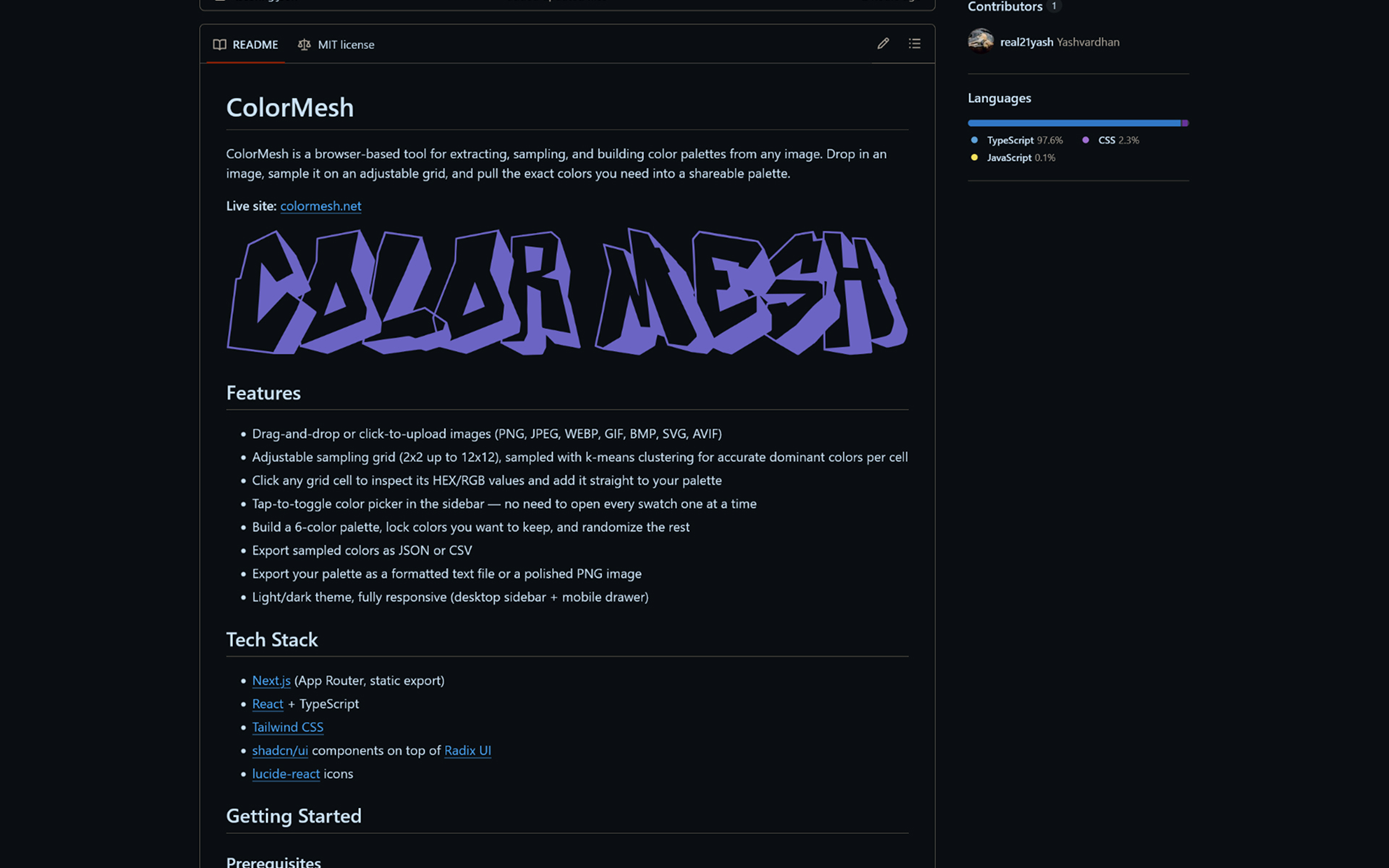
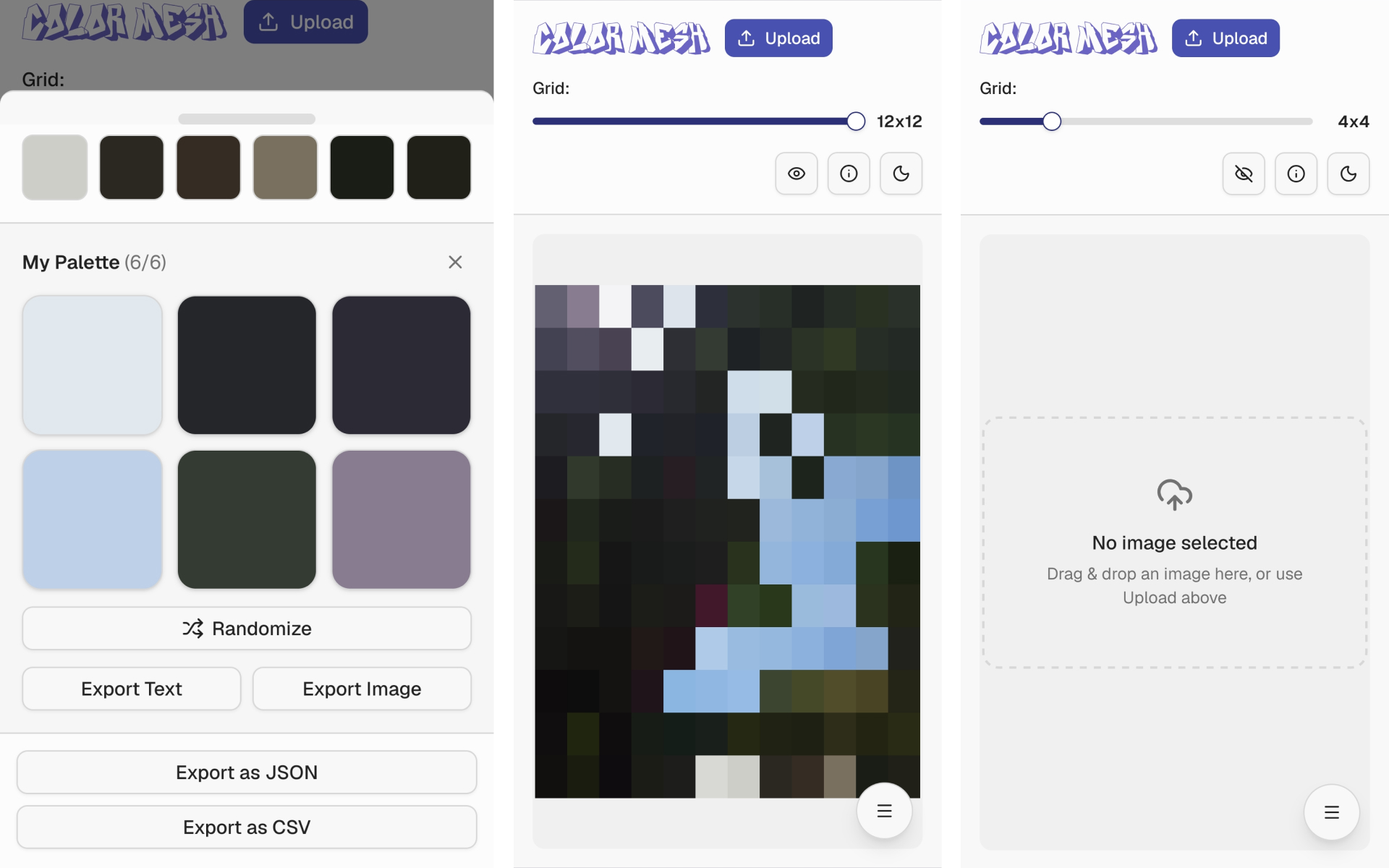
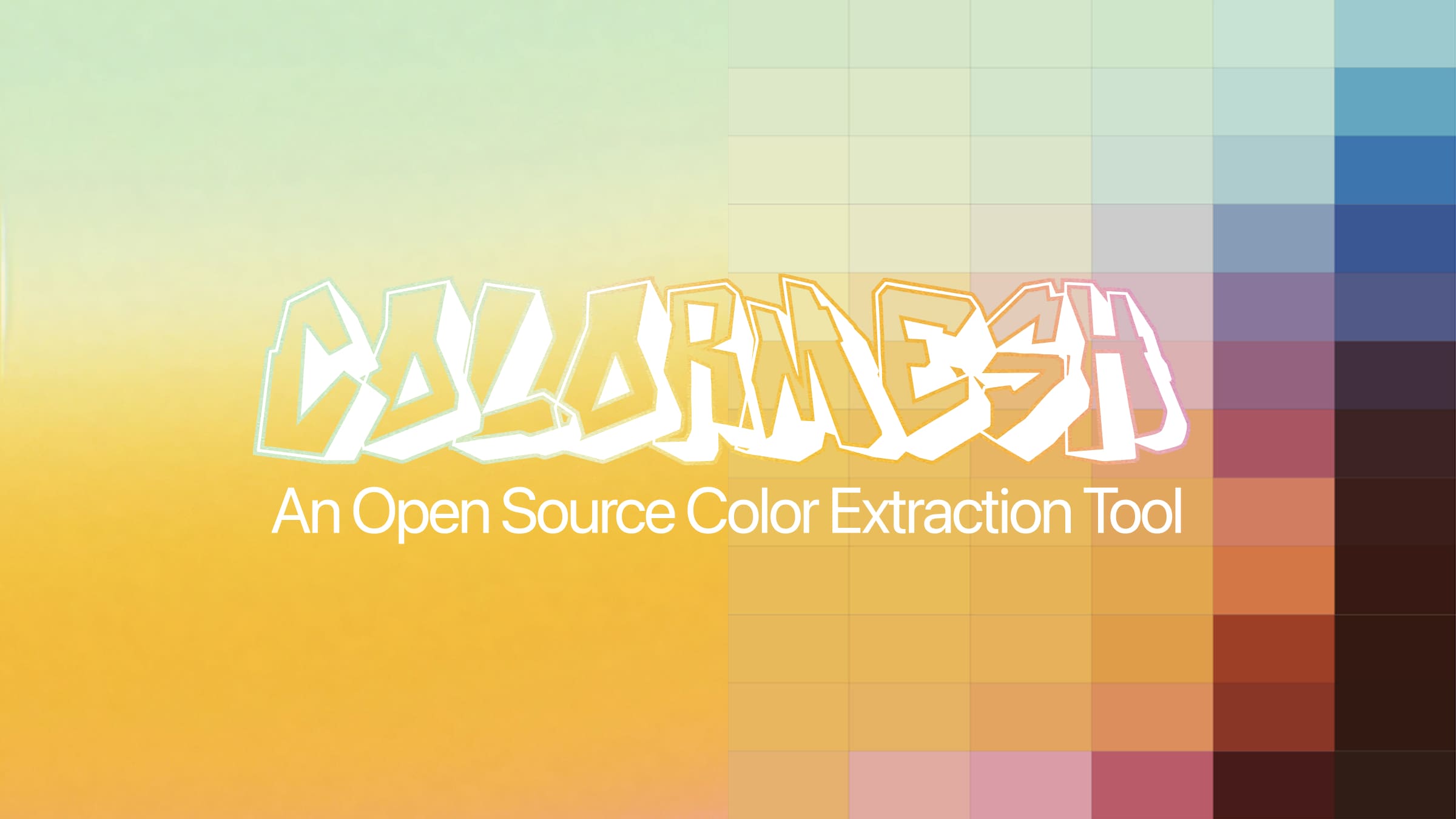
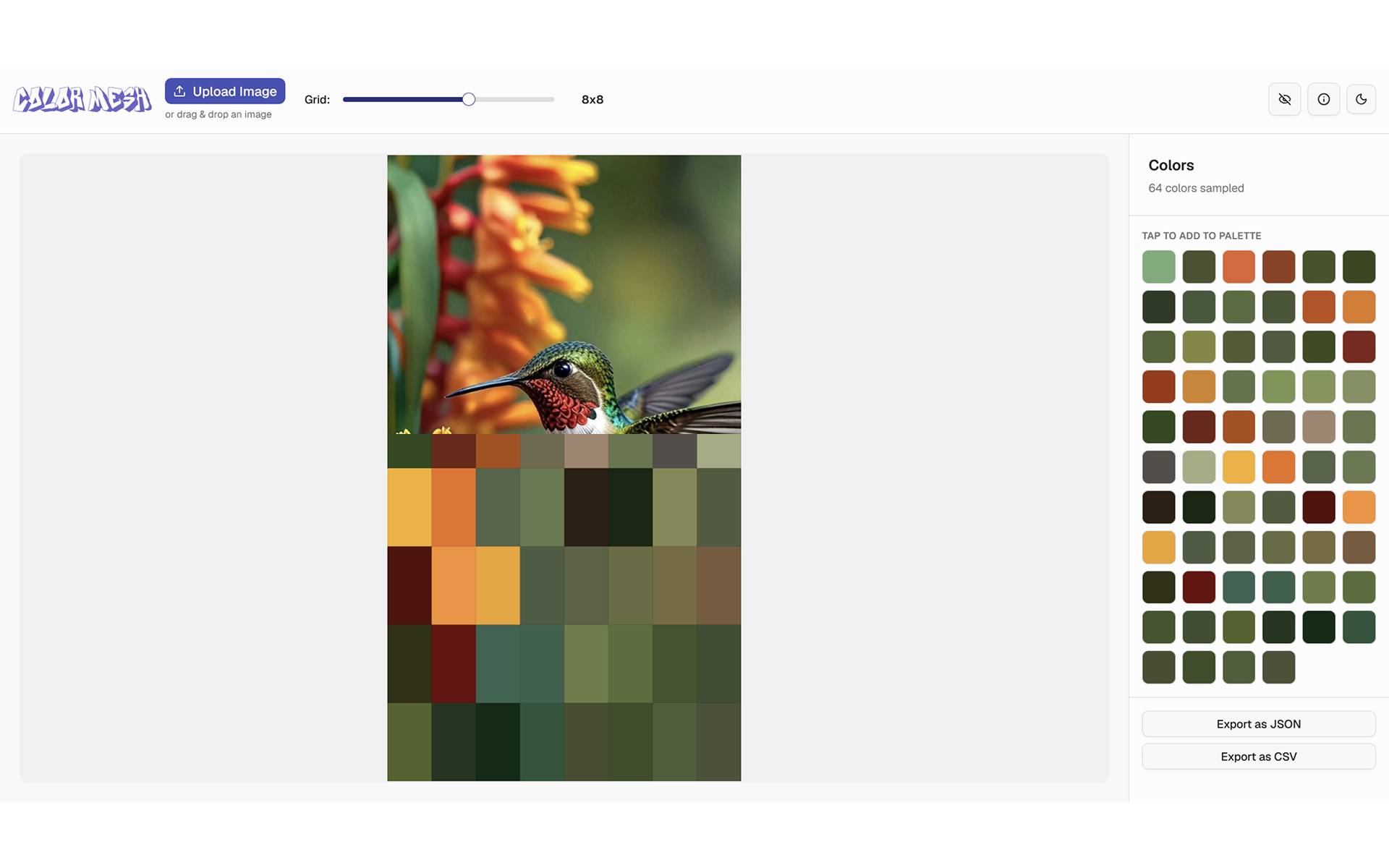
ColorMesh turns any image into a grid of tappable, exportable color swatches, but that's just where it started. It's grown into a full toolbox for anyone working in UX or web design who's ever looked at a website and wondered what's actually going on under the hood, color-wise, type-wise, contrast-wise. One tool, one tab, most of your curiosity about a site's visual system answered.
The Problem

Designers eyeball colors off reference photos all the time, and it's slow and it's inconsistent. But the real problem is bigger than that: if you're curious about a website's design decisions, whether it's the palette, the exact fonts, or whether that color combo actually reads well, you're stuck jumping across five different tools, or worse, guessing. There wasn't one place to go from "I wonder how this looks" to "I know exactly why this works."

The Approach

ColorMesh samples an uploaded image on a grid and turns each cell into a swatch with its hex code, instant and exportable. From there it expands outward: point it at a live website and the style extractor pulls the typography and color values straight off the page. An eyedropper for anything on screen. Dark and light mode. And a contrast checker so you're not just copying a palette, you're confirming it's actually readable. It's not one feature doing one job, it's a small suite that keeps answering the next question a designer would ask.

Expertise

Story

ResearchConceptProduct DesignBrandingDevelopmentMVP

Deliverables

ResearchUX/UIDesign SystemPrototypeWebsiteApplication

Experience

ProductivityEducationCommunityBrand ExperienceCreative ExpressionSocial Impact
Tools
FigmaJSTSCSS
Gallery
Next
Eco Contributions
Concept

Eco Contributions

This one started as a final semester project, and the real challenge I set for myself wasn't "build an app," it was "add value to a system that already has millions of people inside it." Rather than launching something new into a crowded market, I looked at Blinkit and asked what small addition could make the existing experience better for users while actually meaning something for the business too. That became Eco Contributions: a bag return system that turns the brown paper bags piling up in people's homes into wallet credit.

Samsung Watch Redesign
Concept

Samsung Watch Redesign

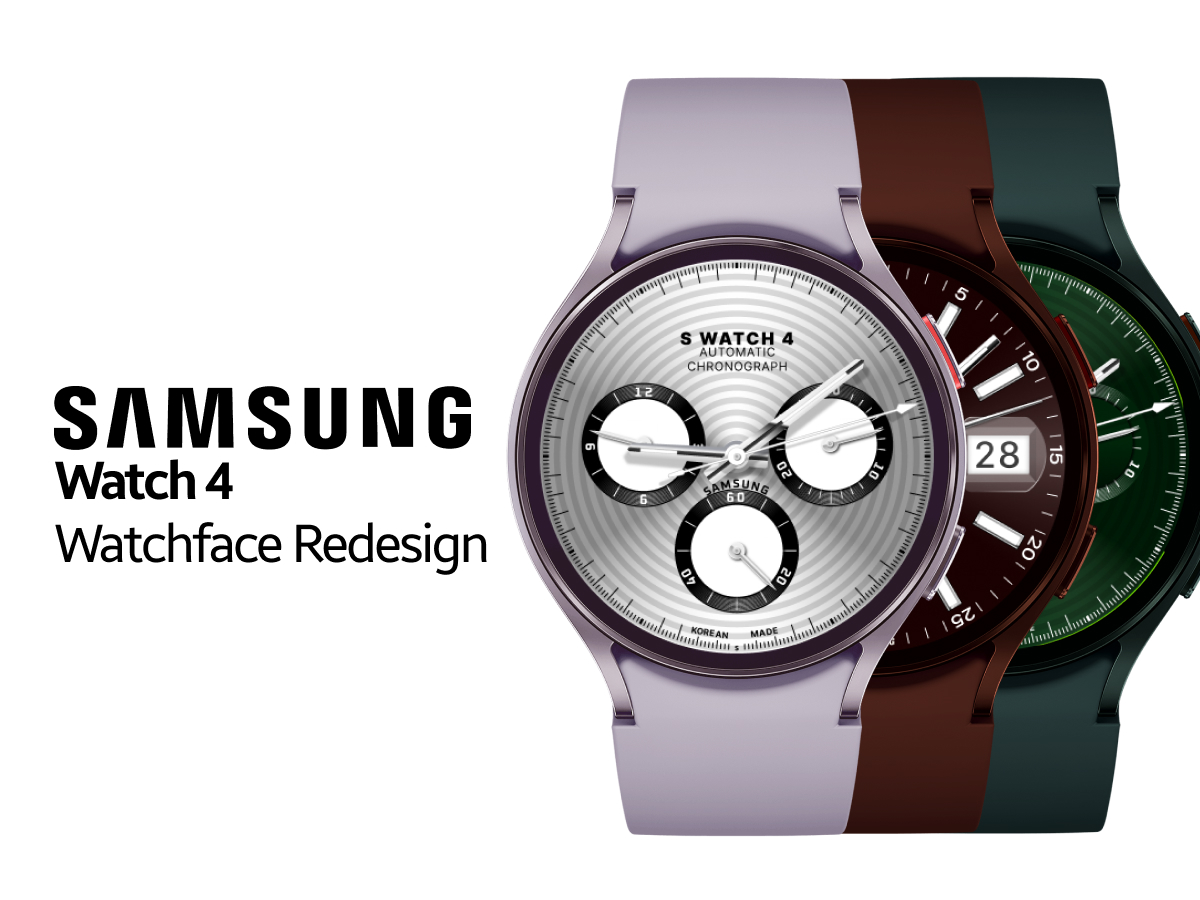
This started as a brainstorm with a specific, almost provocative brief: take a watch selling for 20-25k rupees in India and figure out how to reposition it for buyers who'd happily spend three lakh. Out of everything we could touch, physical materials, textures, touchpoints, I chose the one thing every watch shares no matter its price: the face. Because if craftsmanship is really just visual trust, then the fastest way to change what a product means is to change what someone sees first.